
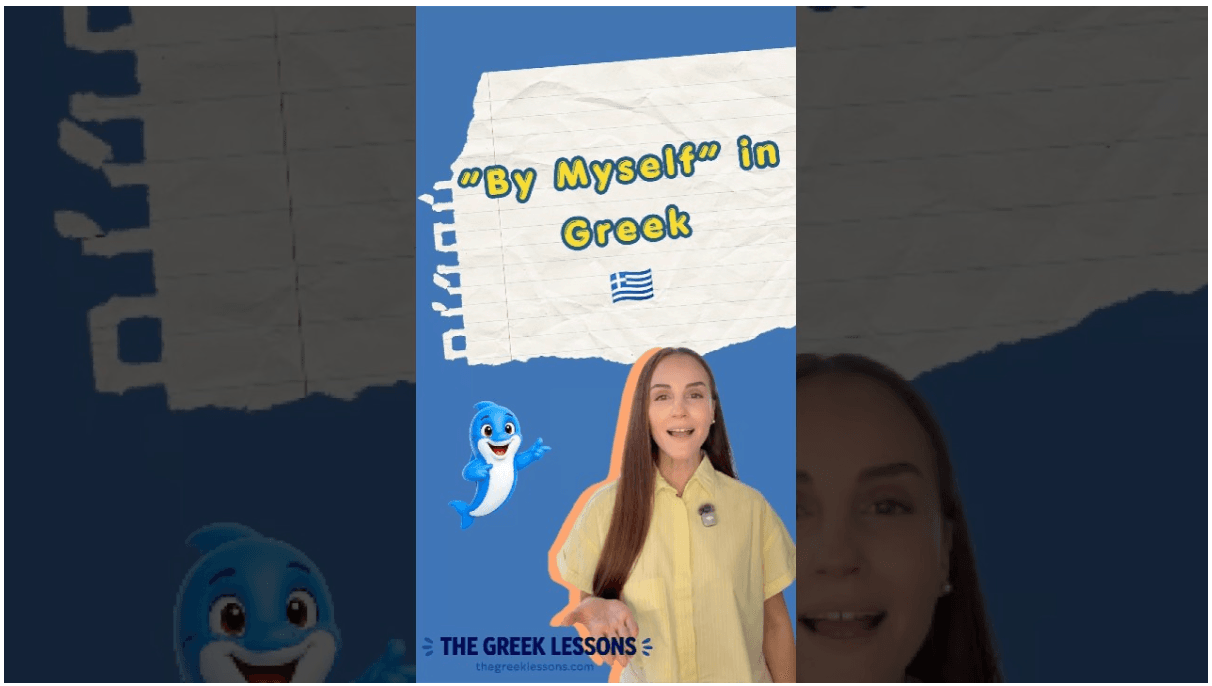
How do you say “by myself” in Greek?
Unlike English, Greek uses different forms depending on who you’re talking about. That’s because the word μόνος changes according to gender, while the word that follows changes according to the person.
How does it work?
👨 Το έκανα μόνος μου.
I did it by myself. (said by a man)
👩 Το έκανα μόνη μου.
I did it by myself. (said by a woman)
And when talking about someone else:
- Μόνος του — by himself
- Μόνη της — by herself
- Μόνο του — by itself (e.g., a child)
A useful grammar tip
Notice that both parts can change.
The first word agrees with the gender of the person we’re talking about: μόνος, μόνη, μόνο.
The second word tells us whose self we’re referring to: μου, σου, του, της, and so on.
And what about the plural?
- Το κάναμε μόνοι μας. — We did it by ourselves. (masculine or mixed group)
- Το κάναμε μόνες μας. — We did it by ourselves. (all-female group)
- Το έκαναν μόνοι τους. — They did it by themselves. (masculine or mixed group)
- Το έκαναν μόνες τους. — They did it by themselves. (all-female group)
So, learning μόνος μου as a fixed expression isn’t enough. Understanding how its two parts change will help you use it correctly in many different situations.
Watch the video below to see how Greeks use these expressions in everyday speech. 🇬🇷